
What Is A PHOB?

PHOB stands for Programmable Hall Effect Open-source Board, and is essentially an open-source replacement motherboard designed by enthusiasts and engineers to address common issues while enhancing the performance and longevity of GameCube controllers.

How did it work before?
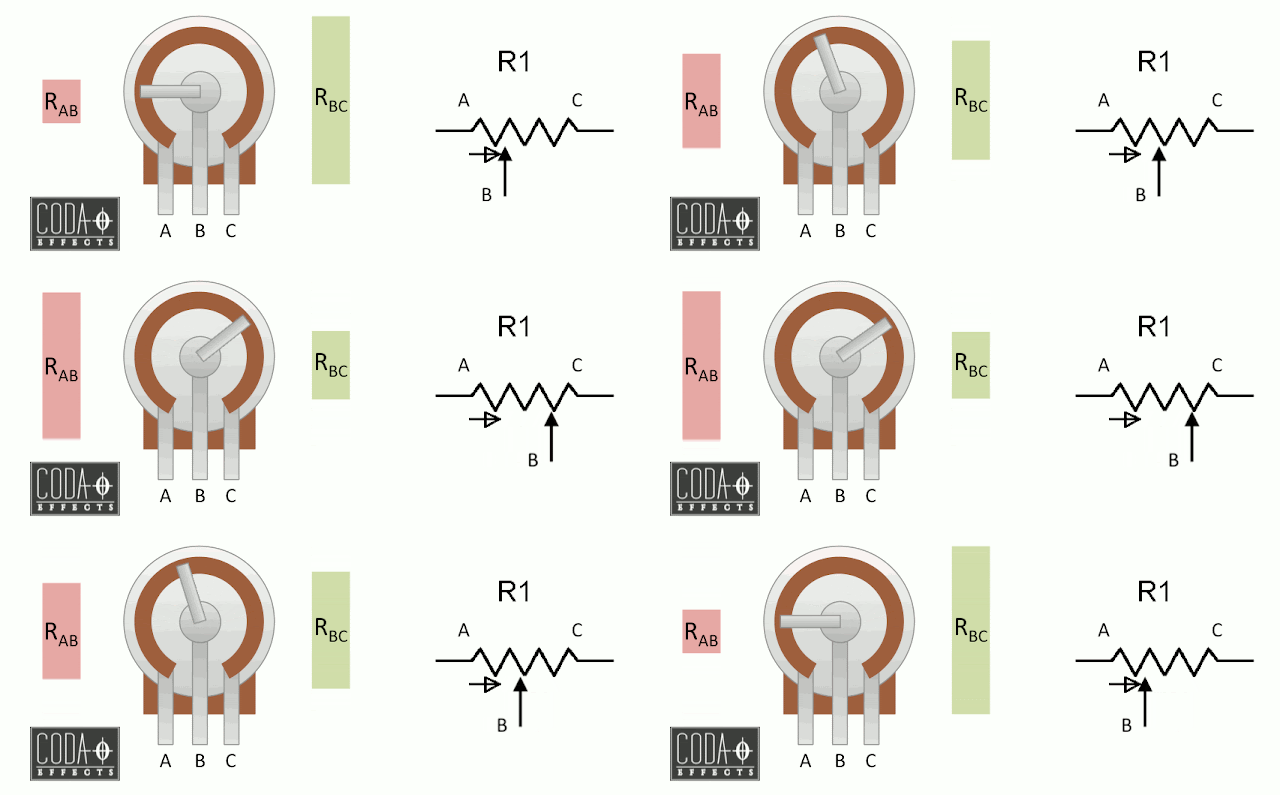
Standard Potentiometers
Standard potentiometers in GameCube controllers translate joystick movement into electrical signals using physical contact. As the stick moves, a "wiper" slides along a resistive track. This changes the resistance and, consequently, the output voltage sent to the console, which indicates the stick position. However, this constant sliding action leads to mechanical wear and tear of the wiper and track. Over time, this wear causes common issues such as stick drift (unintended input), dead zones, and erratic signals, as the physical components degrade (PODE) and accumulate debris, thereby compromising input accuracy.


What’s Different?
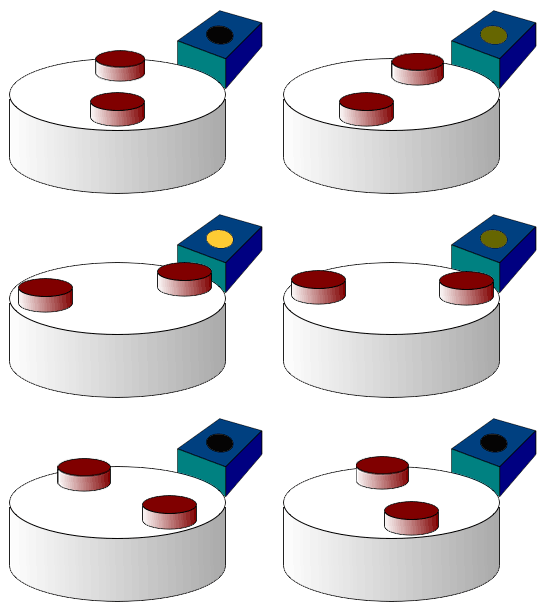
Hall Effect Sensors
Hall effect sensors in advanced Gamecube controllers (like PHOBs) detect joystick position using magnetism, eliminating physical contact. A magnet attached to the joystick moves relative to a sensor chip. The sensor detects changes in the magnetic field strength and orientation as the stick is tilted, producing a varying output voltage that signifies the stick's position. This contactless system avoids the wear and tear inherent in potentiometers, leading to significantly greater durability, sustained accuracy, and the prevention of issues like stick drift, making them a more reliable long-term solution for precise input.
New Advancments
Beyond Just Contactless Control
The PHOB system elevates GameCube controller modification beyond merely replacing potentiometers with Hall effect sensors. Its main advancement lies in its programmability and open-source nature. This enables extensive customization of the controller's performance, including precise on-board calibration of the Hall effect sensors to eliminate dead zones and ensure perfect centering. Users can frequently adjust response curves, gate shapes, and even remap buttons via firmware. This level of control, combined with the inherent durability of Hall sensors, provides a highly tailored, consistent, and long-lasting input device ideal for competitive play and enthusiasts seeking peak performance.

PhobVision Welcome Screen

In-Depth Stick Calibration


Built-in Snapback Filtering

Wavedash Timing Viewer